
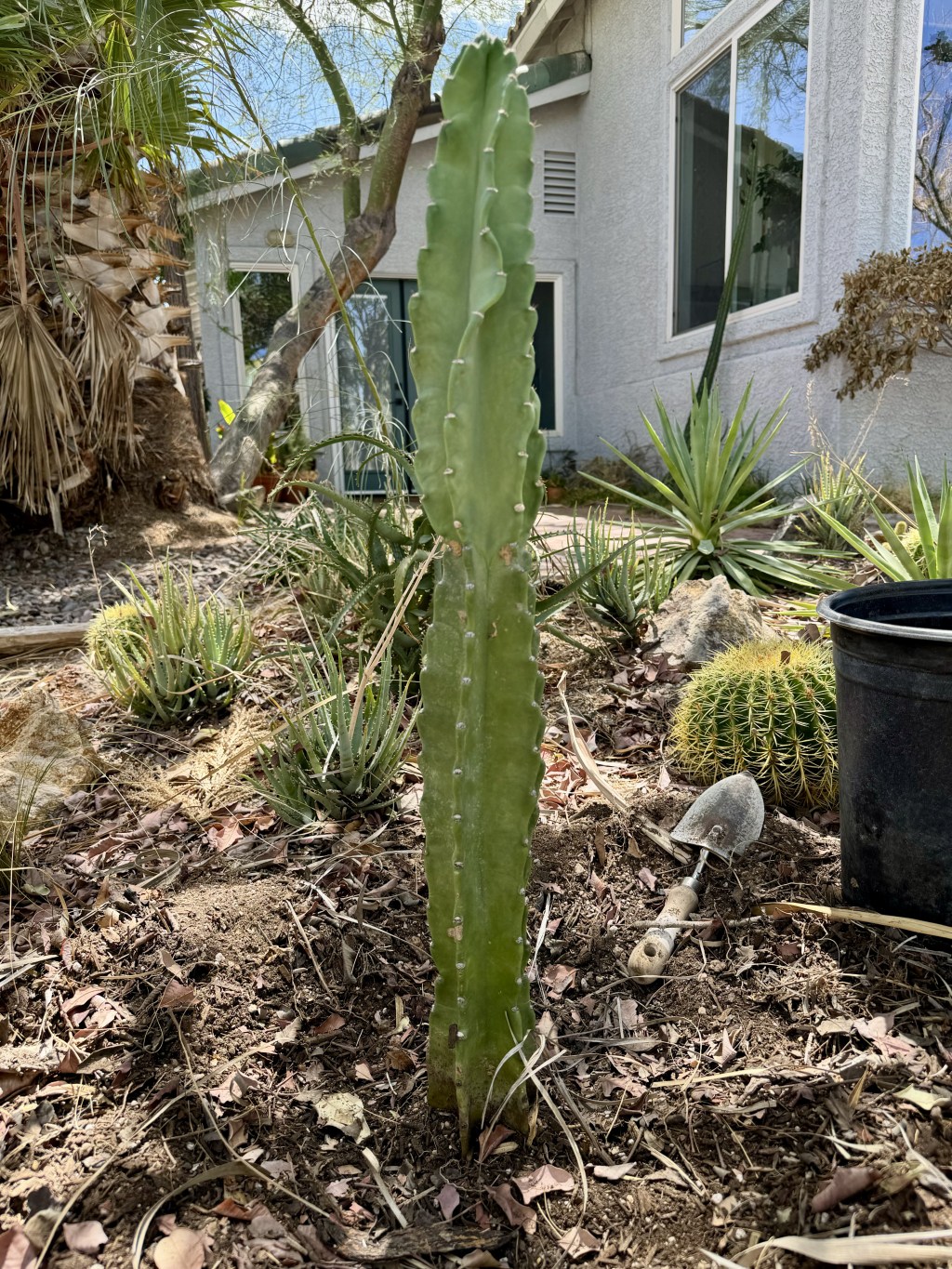
Despite their spines, cactuses are remarkably easy and care-free
Gardeners moving to our region are initially confused by the treatment a cactus gets when it is planted.
Don’t water? Remove the soil?
But these directions for planting cactus in your garden’s native soil will rewarded you with a healthy plant for many years to come.
Choose cactus that do well in Southern Nevada
Not all deserts are equal; and not all cactus come from arid climates. Selecting cactus species well-suited to our local climate is critical. barrel cactus (Ferocactus spp.), prickly pear (Opuntia spp.), and cholla (Cylindropuntia spp.) are all native choices that thrive in our extreme temperatures and require hardly any water once established.
Other readily available cactus in local garden centers include: San Pedro cactus (Trichocerus macrogonus), Peruvian apple cactus (Cereus repandus), and even Mexican Fence post (Pachycereus marginatus). The latter two tend to be a bit sensitive on the coldest nights in our region. These three cactus are more forgiving of extra water and are easy to transplant, which explains their popularity among commercial growers.
Preparing your cactus for planting
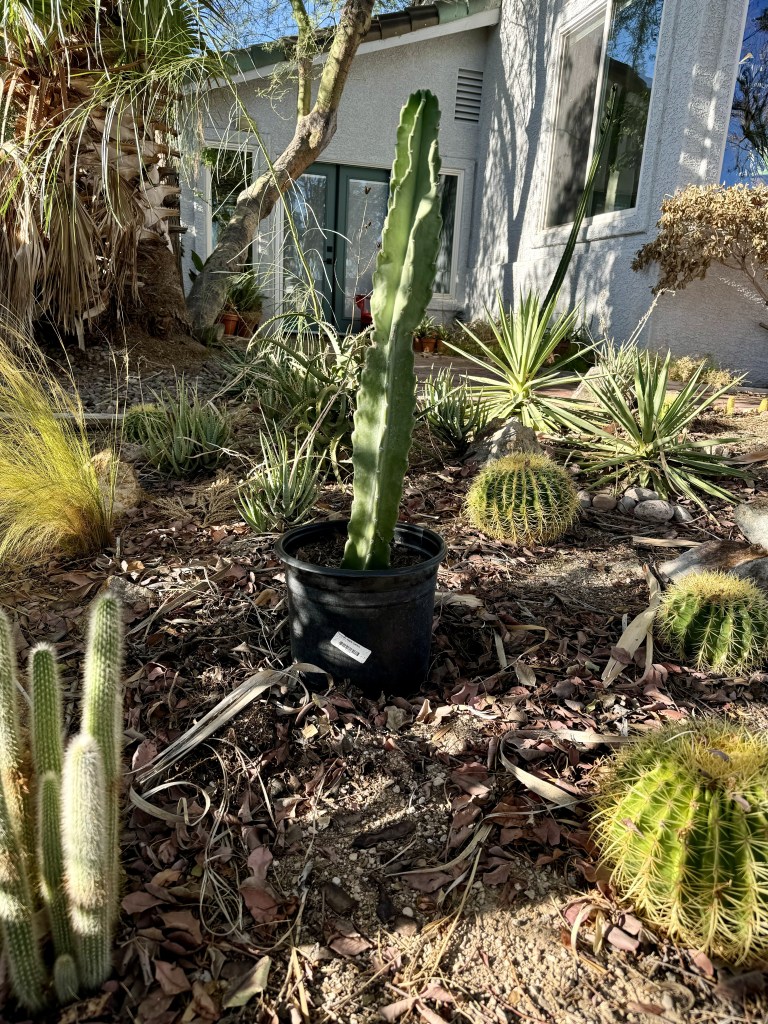
Do not water your cactus in the weeks before planting. If you have recently brought one home from a nursery, check the soil. If it is wet to the touch, let it to dry out for a week or so.
Once the soil in the nursery container is completely dry, carefully remove the cactus from its container. First, lay it on its side. If the cactus is particularly large or heavy, place a bag of soil or pillow under the base of the stem to prevent damage or injury.
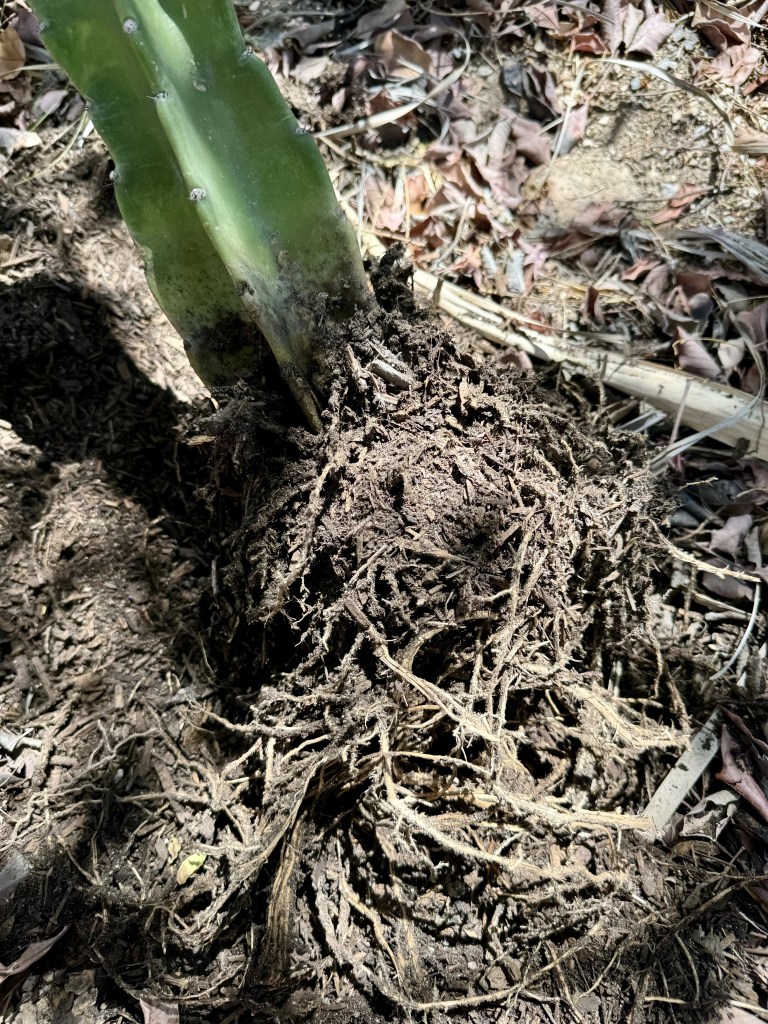
After laying the cactus on its side, gently press the container with your fist to loosen the rootball. This will make it easier to remove your cactus. Once removed from the container, begin to gently break up the rootball. You can get a little rough here, but be careful with the roots. Your goal is to remove most of the soil. Return the soil to the nursery container. You can mix some into to your planting hole to improve the water holding capacity of your soil. Even native plants will appreciate the extra organic matter as long as you don’t over do it.
You don’t need to plant your cactus right away. Some gardeners will leave the cactus out for a week or so for the roots to further dry. Any broken roots will heal during this period.


Planting your cactus into the ground
When you are ready to plant, dig a hole wide enough to accommodate the roots. You should be able to fan them out in the planting hole. The depth of the hole should match the soil line on the cactus. Depending on how deeply the cactus was planted in the original container, you will be digging a rather shallow hole. Shallow holes are one of the joys of planting cactus—you don’t have to dig as much in our hardened soils. The area you are planting in should have good drainage. If you don’t have good drainage, water less or choose a different spot.
At this point, you should be planting into dry soil. Some gardeners will plant into a pre-moistened hole. Find out what works for you. This is horticulture, part art and part science; experiment with what works in your own garden.
Gently lower the cactus into the prepared hole. Salvaged cactus—permitted plants that are excavated from public lands—should have ribbons indicating which way is north. For cactus bought from nurseries, it is almost impossible to tell which side got the greatest sun exposure. Go with your gut (and plant in early fall so it has time to acclimate).
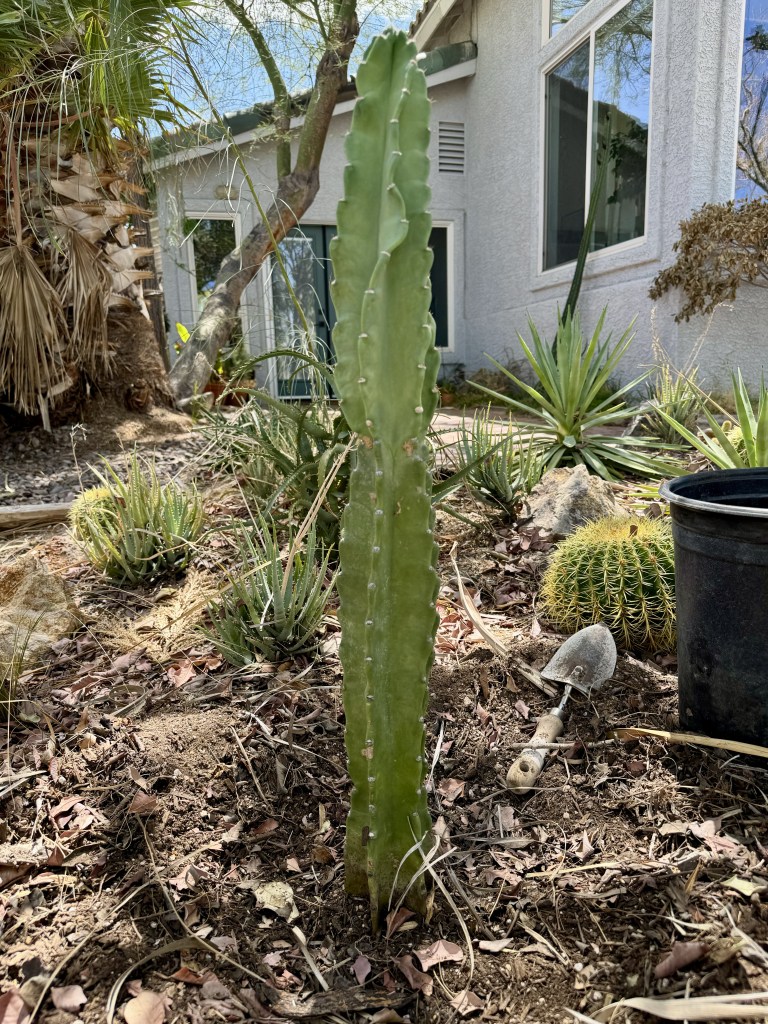
Backfill with your garden’s natural soil, pressing the soil into the roots and around the cactus. The cactus should be planted at the same depth as it was in the soil in its nursery pot. Form a watering basin around the cactus by building a berm. Your berm should be in a radius of about 12 to 18 inches from the base of the stem.
Caring for your new cactus
Don’t water your newly planted cactus for at least one week; longer if the soil was not already dry. Cactus are remarkably resilient and native cactus, in particular, live most of their lives in a state of drought. This dry period will allow the plant to settle into its new location. When it is time to water, fill the basin fully, allowing the water to slowly percolate into the soil. Once the water has drained, fill the basin again. Then, let the soil dry completely before repeating.
As the cactus acclimates to its new environment, it may shrivel a bit. This is normal. Be patient and resist the urge to water. A lot is happening under the soil; cactus roots grow quickly. Once the roots have reached a sufficient size, water uptake will begin in earnest. One day you will walk outside and see your cactus has plumped up.
At this point, you can incorporate a layer of gravel, rocks or whatever mulch you have on hand. Wood mulches should be kept clear of the stem.
Cacti are forgiving
Despite their fierce appearance, cactus are forgiving plants and tolerate neglect. The biggest risk to your cactus is too much water, not too little. Depending on the variety of cactus, it will need supplemental water until it is established. Some varieties require more regular watering. Less is more; so go slow. You’ll be rewarded with a thriving new plant in your garden.



 Mojave Gardener