
Nerium oleander thrives in harsh desert conditions, earning it a second chance in my garden
Sometimes, you plant something—and this is true of anywhere, but particularly here in the low desert—not because a plant is rare, or tame, or because it looks good year round. You plant it for the one or two things that plant does on occasion. For this reaon, people plant lilacs, or forsythia, in temperate climates. It also happens to be a good reason to plant oleander (Nerium oleander) in the desert. The vanilla-and-honey scented blooms in spring are intoxicating and toxic. The desert is a dangerous and beautiful place.
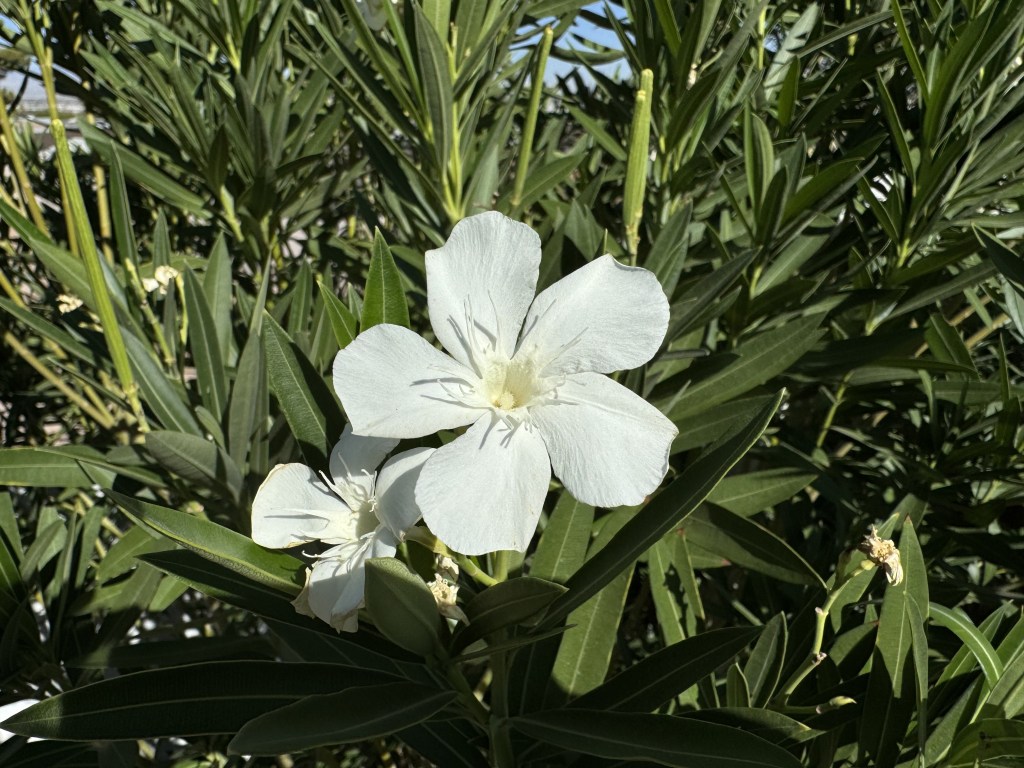
When we moved to our current garden several years ago, I was hell bent on removing every oleander in sight. I had inherited almost twenty. All were ugly, over-clipped, tree-shaped abominations whose visual weight was heavy; oppressive, even. Looking out back brought dread and a sense of suffocation: lightheadedness, pin pricks around the eyes.
Perhaps I was having a panic attack.
One day, during a rather cold February, I couldn’t take it. In a burst of coffee-fueled enthusiasm, I hacked back two large crimson-flowered oleanders that had been trained as trees. I thought I would have a go at pollarding—an age old horticultural practice of pruning trees back to their trunks to encourage the growth of whips or foliage for agricultural or horticultural reasons. With age old European traditions in mind, I hacked and hacked. By the end I felt like I had done something—let into the garden a little light and oxygen.
My lungs fully inflated, I stepped back to see the work of my labor. Turns out: an oleander can get uglier.
An oleander tree—I use the term loosely—will comply with pollarding; but, it will not look good. But plants have a way of growing on me.
My warming up to oleanders began while reading Mary Irish’s Gardening in the Desert, where she admitted to liking this hulking plant, despite its poor reputation. “It is something of a cult in the low desert to despise oleander,” she said. “Scorn drips from the lips of countless landscape students at the mere mention of the plant.” But oleanders are “daringly pretty,” she continued, taking our heat and drought with aplomb. “A long soak once a month is more than adequate to keep one in good shape and in good bloom throughout the summer.”
Truly a plant for harsh conditions.
Mary Irish is almost always right, but she did get one thing wrong about oleander: she advised training them as trees. Don’t do this. When you plant oleanders in your desert garden, let them grow naturally, as shrubs. Too frequently they are pruned into stunted topiaries or trained into small, awkward trees.
This shrub does not want to be a tree.
I’ve cut down about half of these trees in my own garden to allow them to revert to their true characters. The trees that I keep (they block unsightly views just down the hill) require endless maintenance: oleanders sucker heavily. But, if left to their own devices, they transform into handsome, wild specimens while retaining some of the formality that people like about them (the dark, evergreen leaves help here). Left natural, they also look more at home in a dry, hot desert.

In fact, oleander’s tolerance for dry and hot is one of its defining features. With just a little bit of supplemental water they will almost always look good. Most oleanders in the desert get watered too much, and thus get too big. Hold back on water, and this shrub is far less likely to outgrow its space.
But even on water diets, oleander is a large shrub. Give it room. And avoid planting it as a specimen in the middle of a small garden—the density of its foliage make it ill-suited for this purpose. Oleanders make good screens, especially when planted as natural, unclipped hedges. (One reason not to hedge this plant is the fact that the leaves are quite long, and the hedger leaves jagged, torn leaves in its path.) Being shrubby in nature, oleanders take well to being cut back hard every few years. They grow back fast—likely in a single growing season. Give your plant a good soak after performing this operation.
Back to that intoxicating smell. Please remember that oleanders—all parts—are toxic. Avoid munching on them. Domestic animals seem to steer clear and unbothered, though I have taken an oleander “stick” from our German pointer who was using it as a chew toy.
| Light | Full sun, mostly sun |
| Water | Low, very low |
| Cold tolerance | 20F |
| Flowers | Spring, summer |
| Color | Various |
| Size | Huge, if encouraged |



 Mojave Gardener