
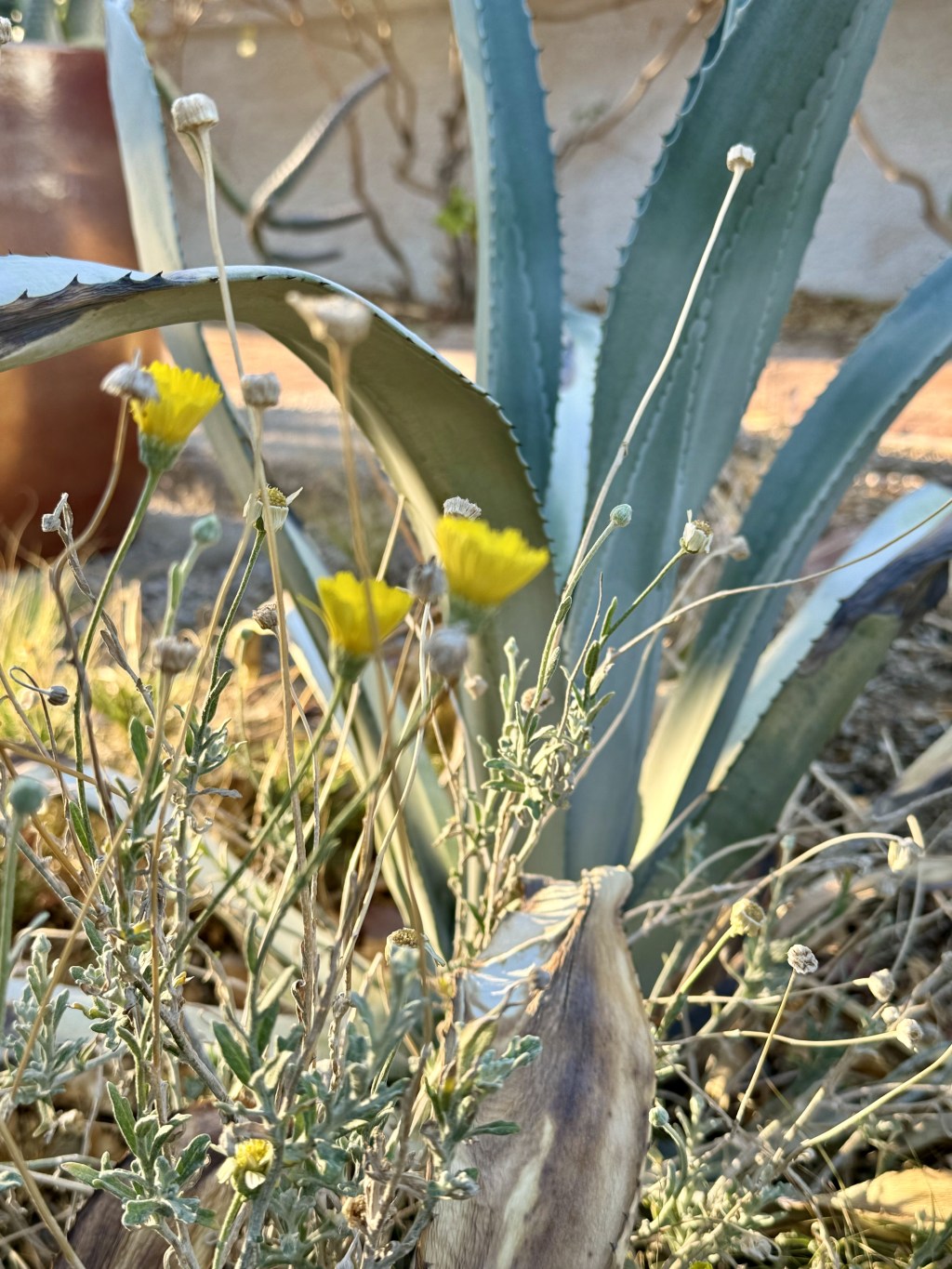
Desert margiold’s yellow can be cool or warm depending on time and season
Desert marigold, Baileya multiradiata, is the most charming desert wildflower. Its perennial flowers are the closest you will get to pure yellow in a desert garden. But even this is a trick that only the desert marigold can pull off, for its yellow is both warm and cool.
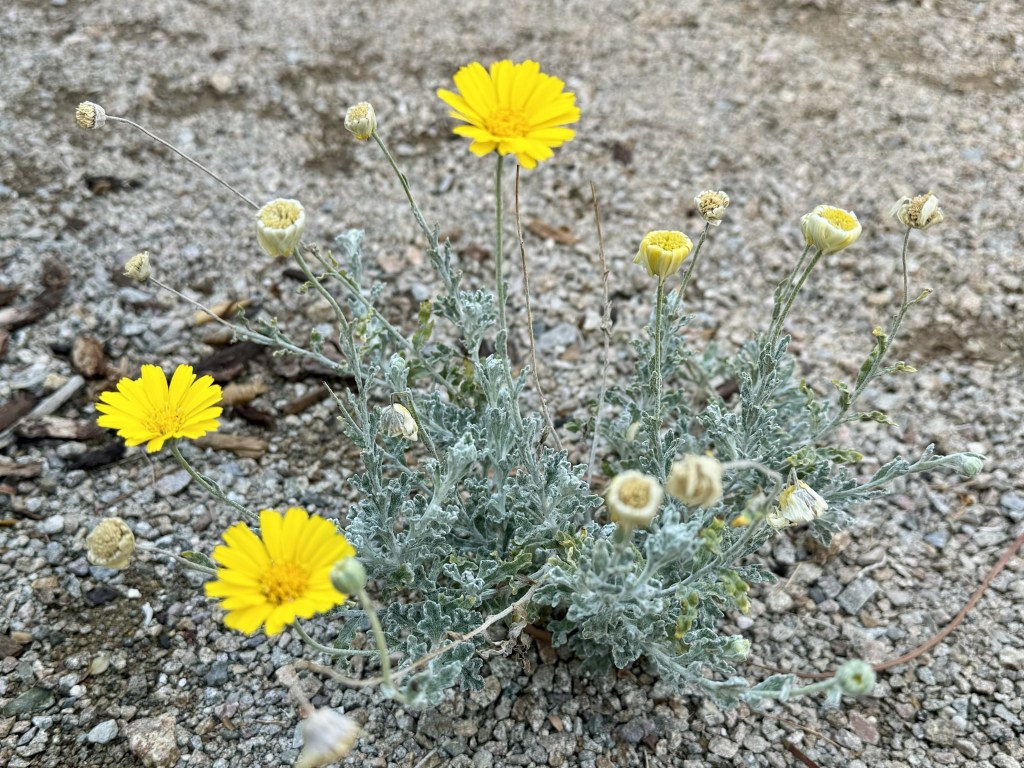
On its own, and in very sunny areas in the afternoon, this Mojave desert native takes on warm tones, especially in contrast to the plant’s furry, blue-gray foliage. The combination is a welcome respite from the washed out, faded look of the garden after our hot, dry summers. It is also a rare nod to the commonly rich hues of fall, which we usually do not experience in the desert. Pomegranate (Punica granatum) is one of few desert-adapted plants to have this quality. Its leaves take on classic fall yellows and oranges before dropping. Add the reddish, orange maturing fruits, and pomegranate is probably the most fall-forward plant in the Mojave garden. But desert marigold comes close.
While the days are noticeably shorter, they are still hot; in this remarkable weather (it is all anyone can talk about), the desert marigold shines in early morning light, promising cooler days in just a few more weeks. For it is in the morning that the yellow of desert marigold deceives us again. The flower takes on distinctly cool tones, pulling inward the greens that are covered by the tiny white hairs on the plant’s furry foliage. Now, the flower is almost green, hearkening to springs past and future. In actual spring, this plant will reward you with large double blooms that look almost like a clear, yellow marigold, if a bit greener, while demonstrating a restraint and elegance that marigolds lack.

It is worth contrasting that clear yellow with another hard-to-pin-down native wildflower: the California poppy (Eschscholzia californica). Its bright blooms in spring are a favorite of tourists who flock in droves to see whole hillsides transformed into watercolored dreamscapes. But in the garden, the California poppy is very orange. The desert has few traditional ephemerals (bulbs), so California poppy is our closest and much-longer blooming equivalent. I grow them all over—the fine, silvery-blue foliage alone is worth it. They grow with ease, and color of any kind is welcome in the desert garden.
I would like to see California poppy growing next to desert marigold in my garden—though my instinct is that they would clash. The two plants’ dueling, color bending tones—at once cool, at once warm—might confuse the viewer. But I’ve never achieved the effect in my garden: these plants will grow where and how they like, thank you very much.
In fact, planting desert marigold is a great way to introduce a little serendipity and wildness into your garden. This plant lends the garden a feeling of effortlessness, which is one of those qualities that makes a good garden great, stemming from the illusion that the garden has always looked this way. California poppy will also help you achieve this quality.

But while California poppy is undeniably ephemeral, the desert marigold has staying power. Plants will last for several years in the garden, blooming off-and-on throughout the year. They will produce seed and, if conditions are right, seedlings will pop up in other garden areas. Which tells you something about how you will grow this plant: by seed.
Mix seed and sand and spread it over fine gravel, which desert marigolds seem to prefer over the chunky stuff that landscapers commonly use. Rake it all in. Let winter rains do the work, or hurry it along by watering on occasion. You may get blooms in the spring after seeding; certainly in late summer and early fall.
Desert marigold flowers off-and-on throughout the hottest parts of summer. In spring, they produce larger, double-flowered blooms, about the same time that prickly pear and brittlebush and hedgehog cactus are blooming. They bloom prolifically in fall, though the flowers are smaller.
| Light | Full sun, mostly sun |
| Water | Very low |
| Cold tolerance | -10 F |
| Flowers | Spring, summer, fall |
| Color | Pure yellow |
| Size | 1 foot tall and wide |



 Mojave Gardener