
Try ditching the straight lines and large, expensive specimens
There are few odes to cactus in the garden. They are so structural. It’s like praising the beams on your pergola or the metal in your fence posts. But cactus are extraordinary plants, expertly adapted to our climate. Many are forgiving of our worst excesses as gardeners.
There is one cactus that I return to again and again as a source of delight, and that is the golden barrel cactus (Echinocactus grusonii). Planted in groups, they look like garden guardians, squat sentinels, popping up in unexpected places, among the aloe and agave and fine grasses in my back garden. I would put these cactus almost anywhere.
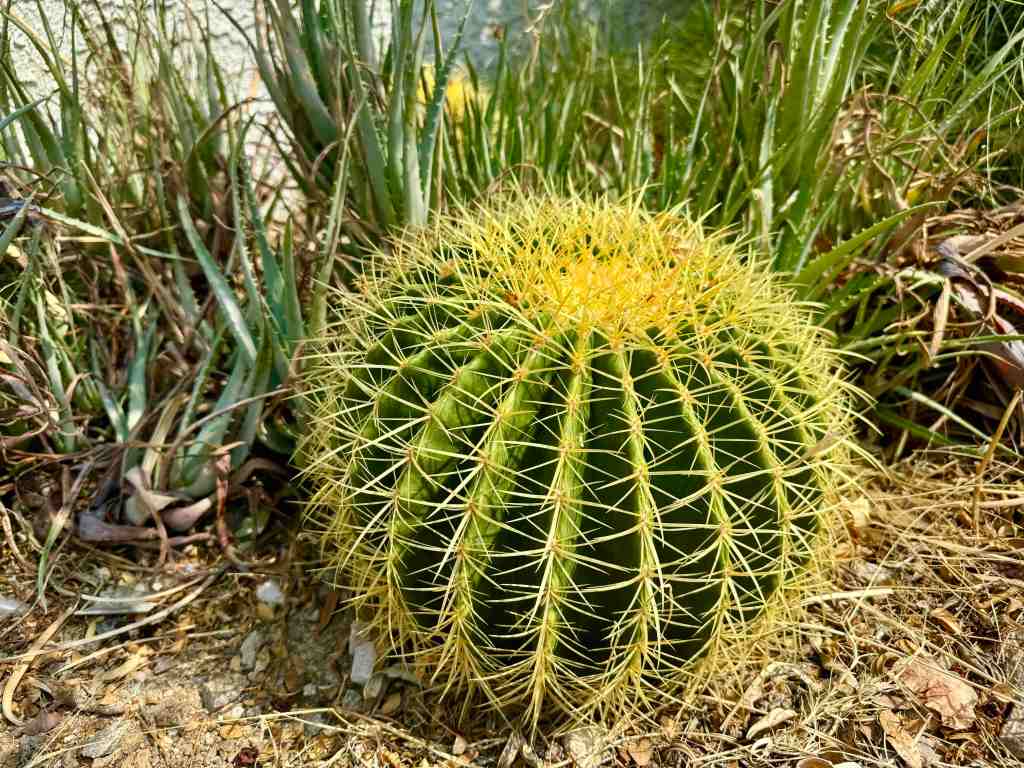
And yes, this cactus is everywhere. It is a hallmark of contemporary design. In front of public buildings and upscale malls, they look like sugared gum drops, stuck to the frosted grounds of graham cracker houses. Row after row after row. This is certainly a way to grow them.
They also invite themselves to a more gentle, wild gardening that is easier to pull off. No need for straight lines and the largest, most expensive specimens you can find. Instead, plant these cactus in informal groups, nestled among shrubs and perennials and boulders, to achieve an authentic, natural garden that will grow and change with the seasons. This approach is also easier on your budget.
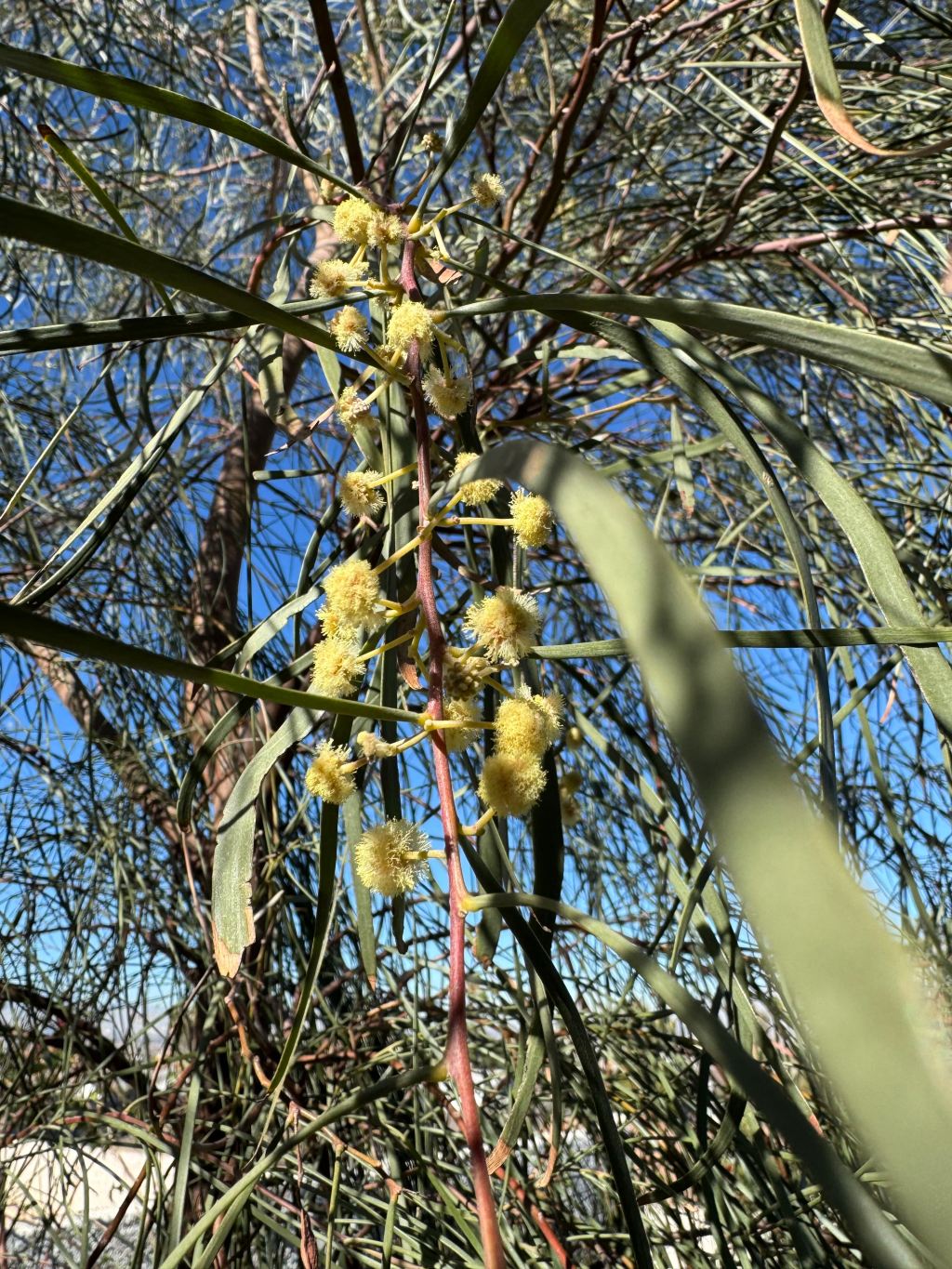
Try this: Instead of buying six large golden barrel cactuses to line your front garden—they make a poor hedge—buy one large, two medium, and three small. Arrange these around a central feature, like a mesquite or palo verde. In my garden, they huddle around an old carob tree (Ceratonia siliqua); I’m planning to add a small family under the shoestring acacia (Acacia stenophylla) on the west side of the house.
You will see these beautiful golden blobs growing in the full sun of our desert, but do better with a little filtered light, some protection from the sun. They look much better and require less water in these conditions. If you purchased a large specimen, it will likewise be less likely to burn if it is planted under the protection of a tree or large shrub.
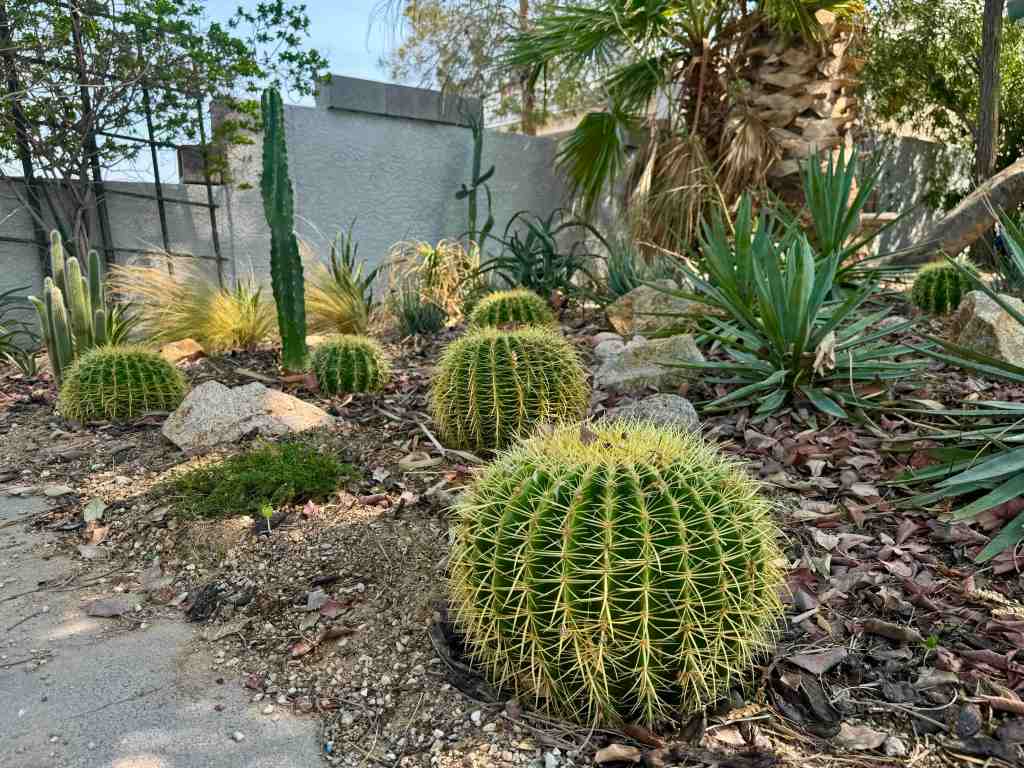
Golden barrel cactuses also look good in pots, a desert substitute for the formal topiary of the clipped boxwood of wetter, cooler gardens. If it is formality you crave, two large golden barrels, each planted in Italian terracotta, make a refined statement for your entryway. (I do not hold with those who say that cactus does not belong near walkways.)
In the wild, golden barrel cactuses are rare; growing in just a handful of places. They are native to the Chihuahuan desert, which takes in the southernmost parts of Arizona and New Mexico, southwest Texas, and northern Mexico. Plants native to the Chihuahuan desert do well in the Mojave. The Chihuahuan, like the Mojave, is a colder desert. It also does not share the expectation of winter rains that the Sonoran does. You can stop watering golden barrel cactuses in our winter; our winter rains are sparse and accommodating.
Speaking of watering: These cactuses, long since cleaved from their motherland, are very used to monsoonal rains. My golden barrels, which are only watered on occasion, do just fine through the heat of July, but suddenly, in August, if monsoonal moisture does not materialize, they wrinkle, almost every afternoon. I soak them for a few days and by September they are fine.
Golden barrel cactuses get large in their native range, but here they are smaller. The biggest I’ve seen are in the two-foot range, tall and wide. But they are long-lived and slow growing and most specimens in southern Nevada are not that old. Perhaps, given time, even in our climate, these sun-catching globes will one day rise up to our waists, as we skirt around them going to and from high end retailers and bureaucratic encounters.



 Mojave Gardener