
Let yucca brevifolia be free in the wild
Joshua tree, Yucca brevifolia, is iconic, second only to the saguaro, Carnegiea gigantea, in its recognizability. Joshua tree is the indicator species for the Mojave Desert—it only grows here. It is also a keystone species. Our ecosystem has built itself around Joshua trees; it depends on them for its continued existence.
Joshua trees also look dreadful in home gardens. I know this is a controversial statement, but their wild, untameable beauty, which is so captivating in the desert landscape, is wrecked in suburban environments. They look like orca whales in captivity. Sad, pale versions of their wilder, truer selves.
You know that scene in Free Willy? It is a majestic and magical moment. Willy jumps over the break and the troubled kid reaches up, almost touching his belly. But all I can see is that sad, limp dorsal fin.
I would like to free all of the Joshua trees in my neighborhood.

But there are other beautiful yuccas you can grow instead. Many species thrive in the low desert, often taking full sun and locations where agave and other similarly-leaved plants tend to fail. Here are two yuccas for your consideration.
Yucca schidigera
Yucca schidigera, or Mojave yucca, is my first choice. Hillsides of these, starting at about 5,000 feet in elevation just outside of the Las Vegas valley, are so arresting in their quality that I find it almost impossible to pull my attention from them. In early fall, after a monsoon season that never came, they are brightly colored exclamation points in the skeletal and desiccated landscape.
Mojave yucca is depressingly difficult to find at nurseries. Occasionally, relocated wild specimens can be purchased from BLM sales. But mostly, you will need to grow Yucca schidigera by seed. Thankfully, the seeds sprout easily and grow quickly.
Sprinkle seeds over a loose, well-draining soil mix that has already been moistened. Add a fine layer of soil over the top and keep moist until they germinate (in just a few days). Once the seedlings have developed some heft, you can divide them into their own pots, which can then be planted out in the garden a year or so later.
Once established, Mojave yucca needs almost no supplemental care. Give it heat, drought, cold, neglect. It will thrive.
Yucca whipplei
Yucca whipplei, or Our Lord’s candle or chaparral yucca, has bluish green leaves, though there is considerable variation across the species. The leaves on the plant in my garden look almost baby blue under certain light conditions.
This yucca is unique among the genus because it flowers only once. But it takes a very long time—as much as 50 years. Which is too bad, because they are breathtaking when in bloom. During late spring and early summer, on the drive from Las Vegas to Los Angeles, you can see whole hillsides covered in their attractive flowers.
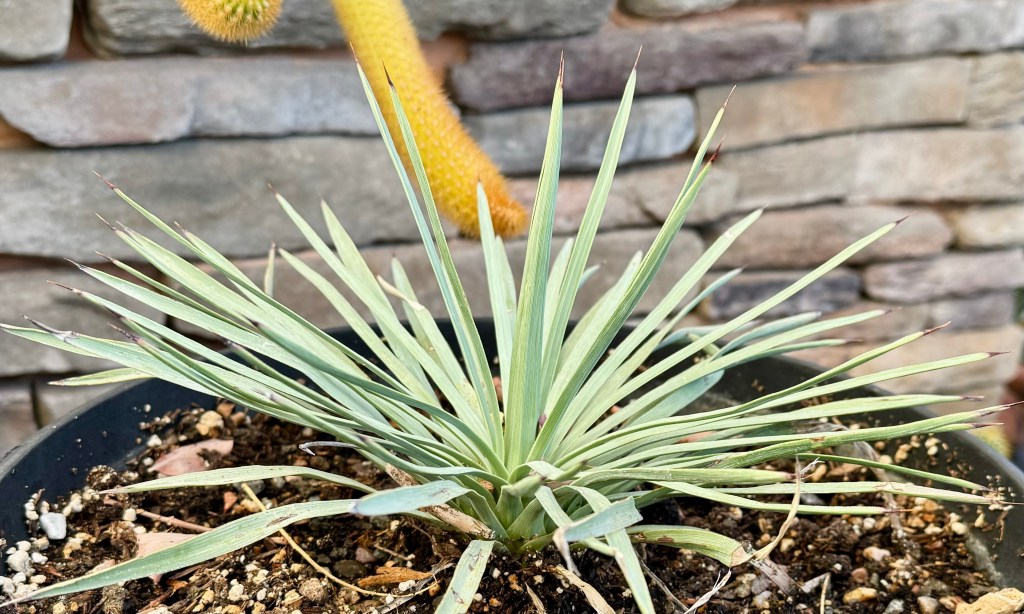
Yucca whipplei is not grown much in southern Nevada, which is hard for me to understand as it is practically native. While whipplei is commonly associated with California’s chaparral, the variety caespitosa grows in some parts of the Mojave. There is also a population that grows in the Grand Canyon, according to Mary and Gary Irish, who spent their careers chronicling and writing about agaves and yuccas.
Whipplei will take some shade (and in our climate does best with afternoon shade), some cold (down to 10 degrees), and some extra water during long, hot and dry periods.



 Mojave Gardener