
Planting these native seeds now will make your garden more resilient and beautiful in spring
The streetlights of my youth were soft and warm before they were blue and cool and sickly. I appreciate the energy savings we get from LEDs—I really do. But when I look out across the Las Vegas Valley and see the old neighborhoods and the new, my heart and vision rests upon the old.
Everything changes. My son will have a different memory of soft and warm. That’s ok.
But cottonwood trees transport me to those softer times. The leaves on these giants are changing now in northern Utah, where I spent the weekend with family. I find it almost impossible to describe how warm their yellow is. I stood for a few moments in my parent’s backyard, where cottonwoods grow along a seeping spring in the county golf course behind their house, trying to sum up the courage to describe them. Their leaves right now are the golden version of quicksilver. They are light transformed into matter.
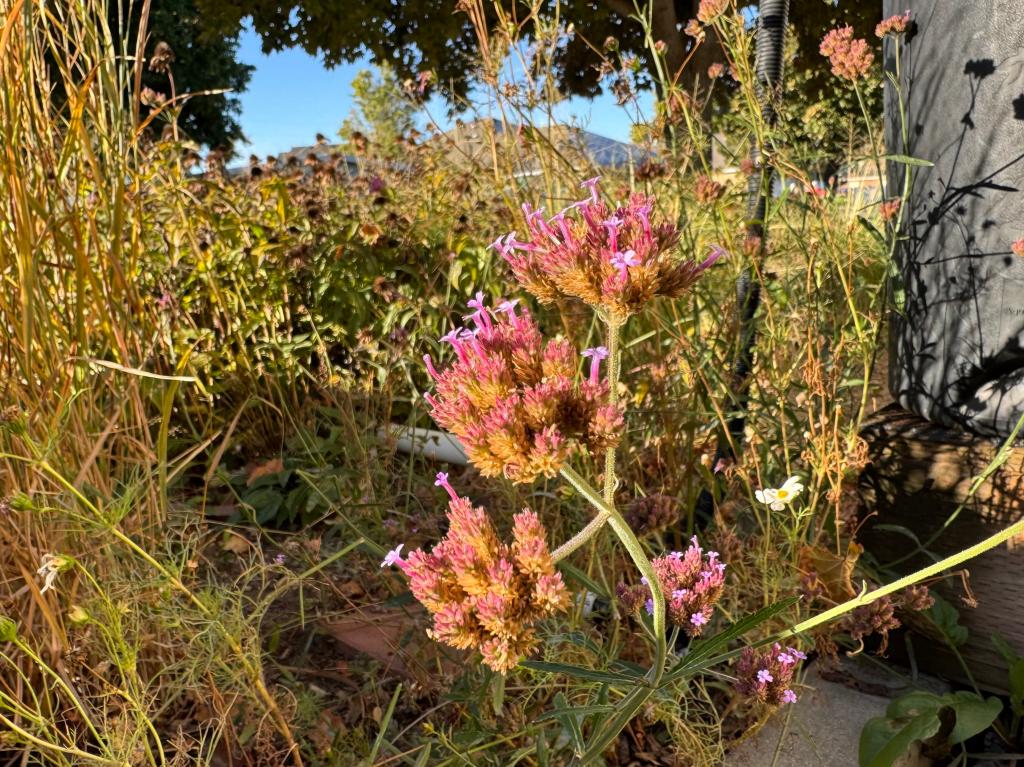
Cottonwood trees grow in riparian environments. They grow even here, in the Mojave, at higher elevations. They might grow in the hot, low desert, though I do not know if the water expenditure is justifiable.
The desert gardener Scott Calhoun likened desert gardens to “small, controlled riparian areas.” These are among the soberest desert gardening words ever written. Our gardens have to have water.
Still, I dream of a truly wild and water free garden that is more than creosote. A walk just about anywhere in the desert wilds tells me it is possible.
I woke up very early a few months ago to hike a small mountain trail near Lake Mead. I never reached the top of Hamblin Mountain, a fact that says more about my desert hiking aptitude than it does this mountain, because it is not very tall, at just over 3,000 feet. But I saw how rich and beautiful and lush, in its own way, the desert can be even after months of no precipitation. Smooth sandpaper plant (Petalonyx nitidus) sported new and bright chartreuse leaves, while the older leaves were yellow and golden; their tan seed heads caught the early morning light. Pygmy cedar (Peucephyllum schottii) was a rich, bright green and so fragrant as I brushed by it. Desert holly (Atriplex hymenelytra), severely stressed from the heat, was purple and red.
I saw a thistledown velvet ant (which is actually a wasp) make its way across a gravelly trail. As I got nearer, it made threatening and laughable movements in its own diminutive way. Where I see the dry white bones of climate disaster, the wasp persists, moving along like the ant it resembles, pushing whatever is the desert version of a rubber tree plant.
That so much can grow and thrive here makes my own complaints feel suddenly meager. We are well over 100 days without rain. We had well over 100 days with temperatures over 100 degrees. Nevertheless, we—plants and animals and people—persist.
In honor of that persistence I am planting the most resilient of all plants this week: native wildflowers. Among the seeds I’m sowing are desert sand verbena (Abronia villosa), desert marigold (Baileya multiradiata), California poppy (Eschscholzia california), desert bluebells (Phaecelia campanularia), and desert globemallow (Sphaeralcea ambigua).
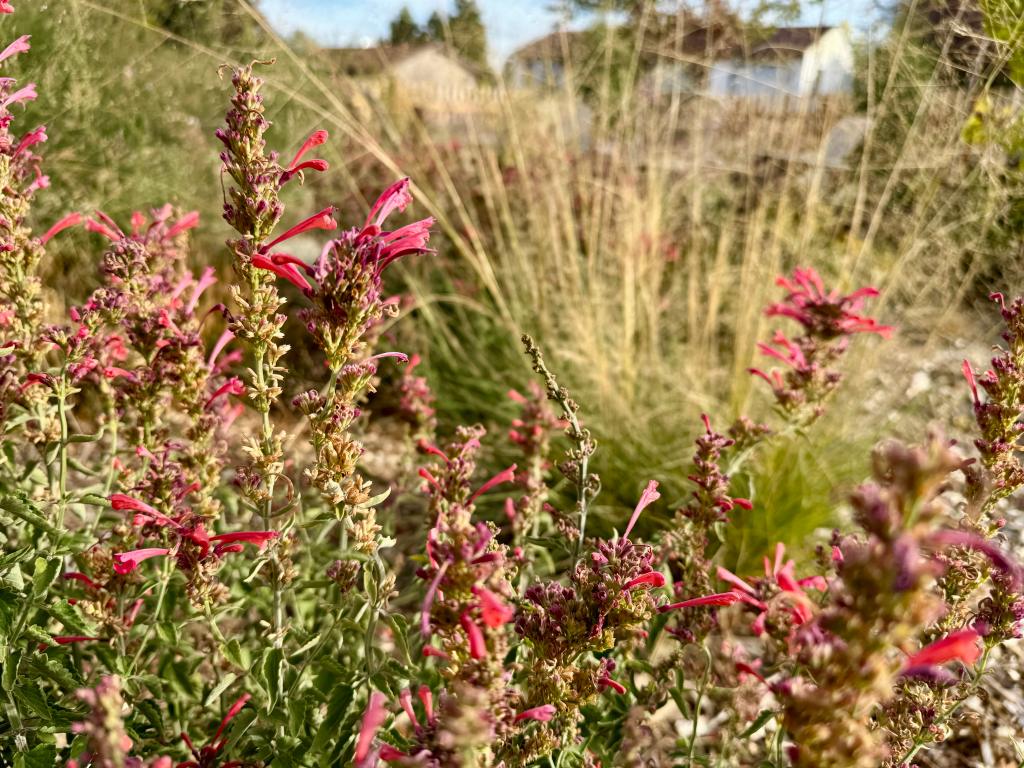
I plan to be utterly careless in my method and I invite you to do the same. Try this:
Place your seeds and some rough sand or decomposed granite into an old jam jar. Vigorously shake the jar throughout the day to rough up the seed coats, like a flash flood on a summer afternoon. The effort will prepare them to absorb what little water there is this winter.
You might find a rhythm or prayer in your heart as you shake an old glass jar filled with sand and seed. I certainly have.
Pick any prayer you like, but I find myself saying the Jesus prayer. It is the only prayer I know how to say anymore. It is a short, old, Eastern Orthodox prayer. But I didn’t learn it from a church. I was introduced to it by JD Salinger over 15 years ago as I was reading his short stories, Franny and Zooey.
Franny and Zooey are the two youngest siblings in the Glass family. They learned the prayer from their oldest brother, Seymour. But in the book Seymour has already passed, having committed suicide after returning from World War II. Here is the prayer (though Salinger transcribes it a bit differently): “Lord Jesus Christ, Son of God, have mercy on me, a sinner.”
But say whatever prayer you like. It could be as simple as: “Let my seeds grow; Dear God, somehow, make it so.”
Then spread them about into the gravel pit that is your yard. Rake them in if you like. It really is up to you. But do this: sprinkle a little water just this once. You want the seeds to find the cracks and other secret places that will be theirs for their entire lives. Then step back.
If you are of the obsessive type, water them every few days until their tiny cotyledons emerge like brave and intrepid explorers of some uncanny world. Ease off the watering as true leafs grow.
Or, leave it all to nature, which is where I plan to start. But I know my obsessiveness will germinate before the seeds do and that I will water them at least a little bit. That’s ok too.
This weekend I planted bulbs in my sister’s northern Utah garden. I liked what the planting package said: “Don’t worry too much about which end is up on a bulb. Bulbs know to send shoots up and roots down. They will grow and bloom even if you plant them upside down.”
In our efforts to perfect our gardens through scientific principles it can be so easy to forget the art of gardening. It is such a forgiving and noble and, at its heart, spiritual pursuit. There are very, very few correct approaches. Your seeds, just like my sister’s bulbs, will grow.
And you will grow. And so will weeds. Are we that different?
Among the weeds will emerge the cotyledons of a wildflower, unfolding in the light. Desert sun, now warm and nurturing and finally forgiving, here, in fall and winter, will grant you this: if not the garden you want, at least the garden you deserve. And even that is far better and far more beautiful than you could ever hope for or imagine.



 Mojave Gardener