

A stroll through the winter garden, with watering tips for managing our very dry and warm winter
It has been nearly six months since rain. The airport measured just .08 inches on July 13. There have been trace amounts since then, but not enough to wet the sidewalks, let alone the fading leaves of the catclaw acacias (Senegalia greggii). But twice over the last month the sky has darkened and the air turned wet with moisture, like a stranger’s whisper in my ear in a dark and empty movie theater, cool and soft but when I turn to look, gone.
It’s not entirely true that there has been no rain. A dark and lonely cloud came to my garden several months ago, a straggler and rebel who pouted for a few minutes directly above our house. I was with my husband in a little downtown area in Henderson called Water Street, which is just a short bike ride from our house, and saw the rain fall and felt some of it there, too, though it was still sunny. Steam came up from the asphalt and the air was hot and muggy. When I got back home I could tell my instincts were right about where the bulk of cloud had hovered because the ground was soft and wet and leaves and other autumnal refuse had all congregated at the bottom of the slope in our backyard.
But it has been very warm all winter, well above our normal averages, and what little water we have received was months ago, so the garden needs a good soak. Sonoran natives especially will appreciate some water right now. And even the Mojave natives, though they are made for these conditions, will thrive if given water. In Las Vegas, our wettest months are December, January, and February. While December has disappointed, January and February may not.

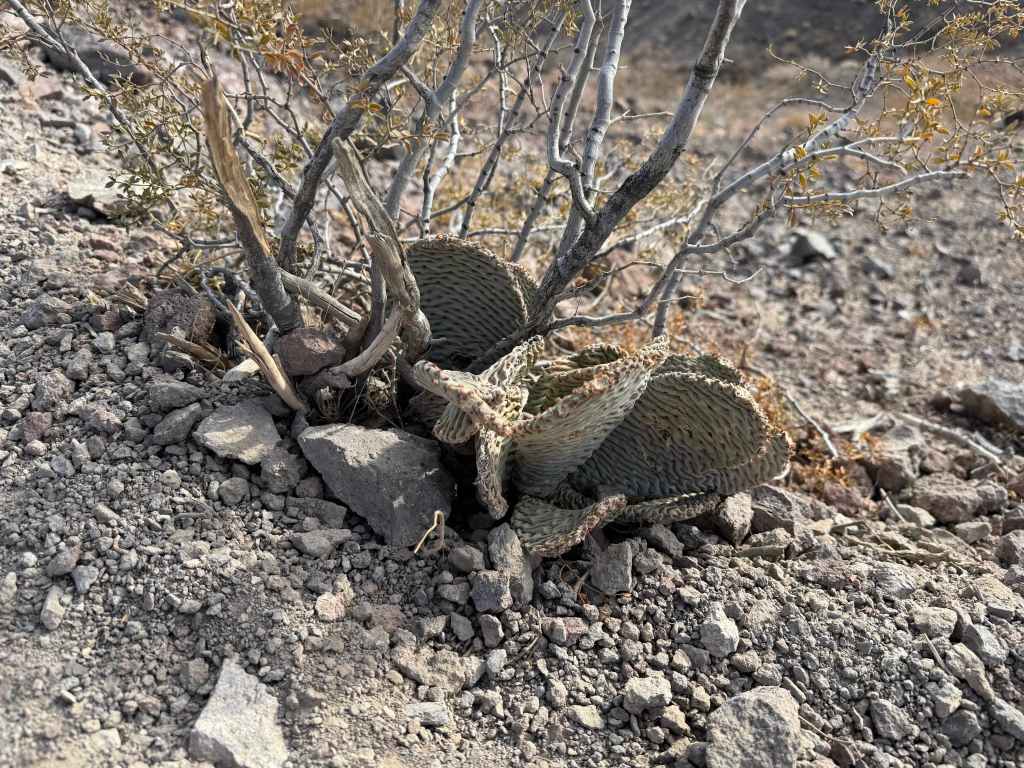
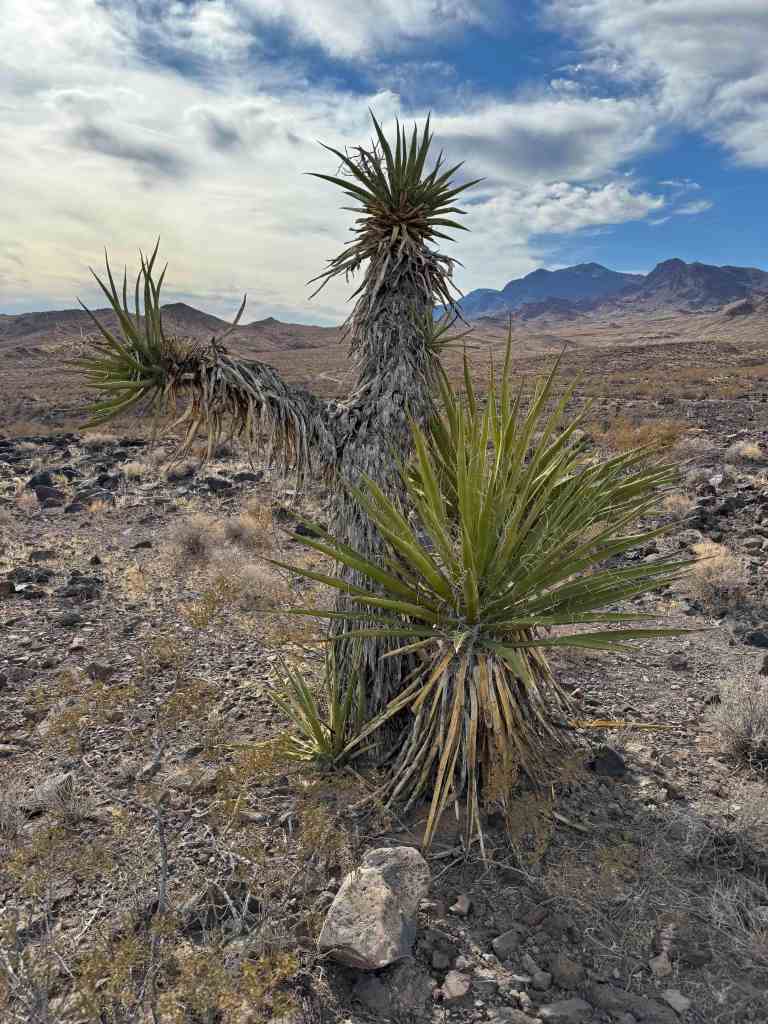
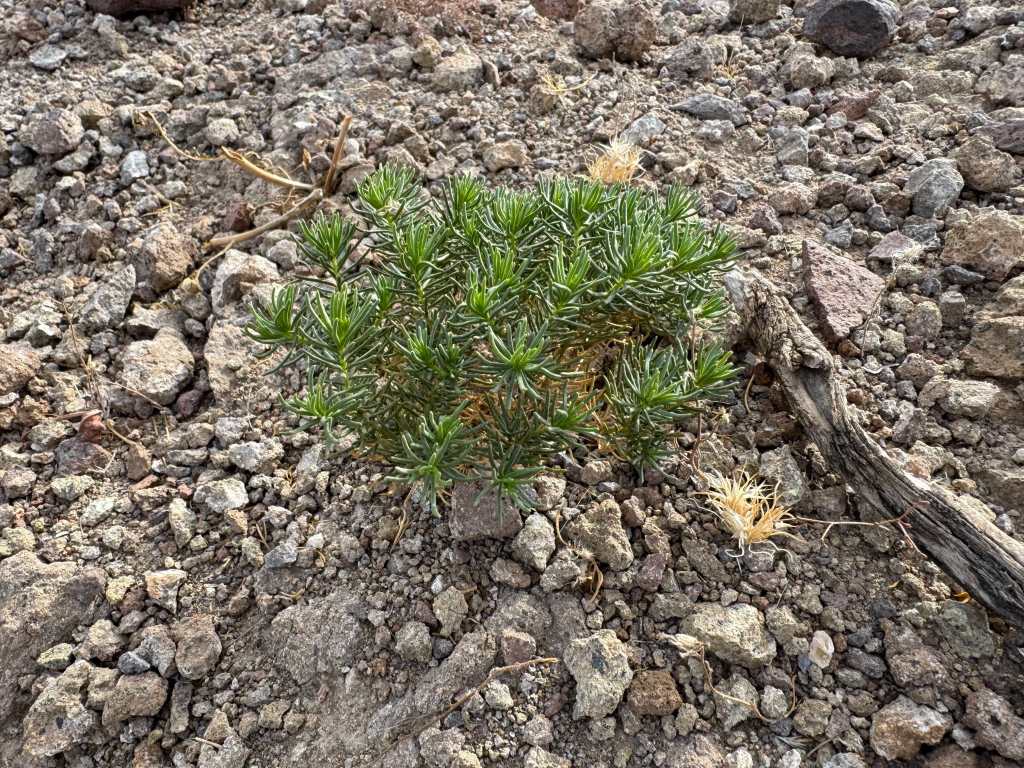
On a hike through Sloan Canyon earlier this week the creosote (Larrea tridentata) were bronze and copper and many had started to drop their leaves. Beaver tail cactus (Opuntia basilaris) were shriveled and pathetic. But the cholla (likely Cylindropuntia echinocarpa) glowed, the Mojave yucca (Yucca schidigera) looked almost tropical, so bright and green. Pygmy cedar seedlings (Peucephyllum shottii) were tufts of lime in one little spot. I wonder how they manage, when the creosote and beavertail cannot.
In my own garden, I gave everything a deep soak on my designated water day. I’ll withhold water with the expectation of January rains, but if no water falls, I will water again in a month. The cactus and agave don’t need the water, but shrubs and trees and wildflowers will gladly take it.
Wildflowers are inching out of the ground, mostly desert blue bells, desert poppies, and desert marigold. But I spotted a desert verbena seedling (Glandularia gooddingii) as I was planting the divisions from a pot of overgrown Opuntia ‘Dark Knight’ into a dry and gravelly section of the front garden.
In fact, the weather has been so mild that I have continued to plant. Trees, shrubs, and perennials should be watered in thoroughly after planting. But succulent plants get no water at all, not for weeks and weeks. The days are warm, but the ground is cool and too much moisture could lead to root rot. When watering the wildflower seedlings on the west side of the house I was careful not to wet the newly planted diamond cholla (Cylindropuntia ramosissima) I planted there a few weeks ago.
It was with great anticipation that I decided to plant the blue oak seedling (Quercus douglasii) I picked up from the Springs Preserve plant sale earlier this fall when the temperatures were still too hot to plant. I had intended to baby it all winter but it has been so mild I decided to plant it in the front garden behind a large rock and between two Baja fairy dusters (Calliandra californica) that will be its nurse plants during the hot summer, protecting it from scorching sun.
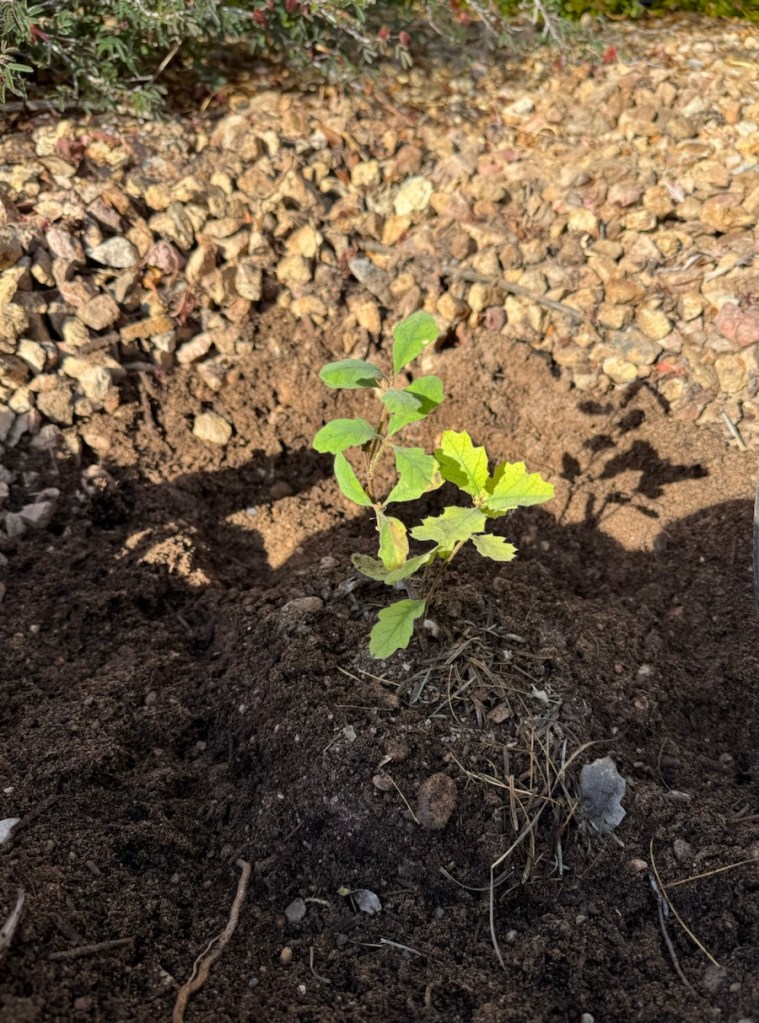
Blue oaks are ponderous and naturally found in the foothills of the Sierra Nevada, but there is a glorious stand of them growing at Spring Mountain Ranch State Park between the parking lot and the giant, watered meadow. The leaves on my own seedling look like blue holly leaves, some of them at least. Of its dozen-or-so leaves, about half are smooth and lobed.
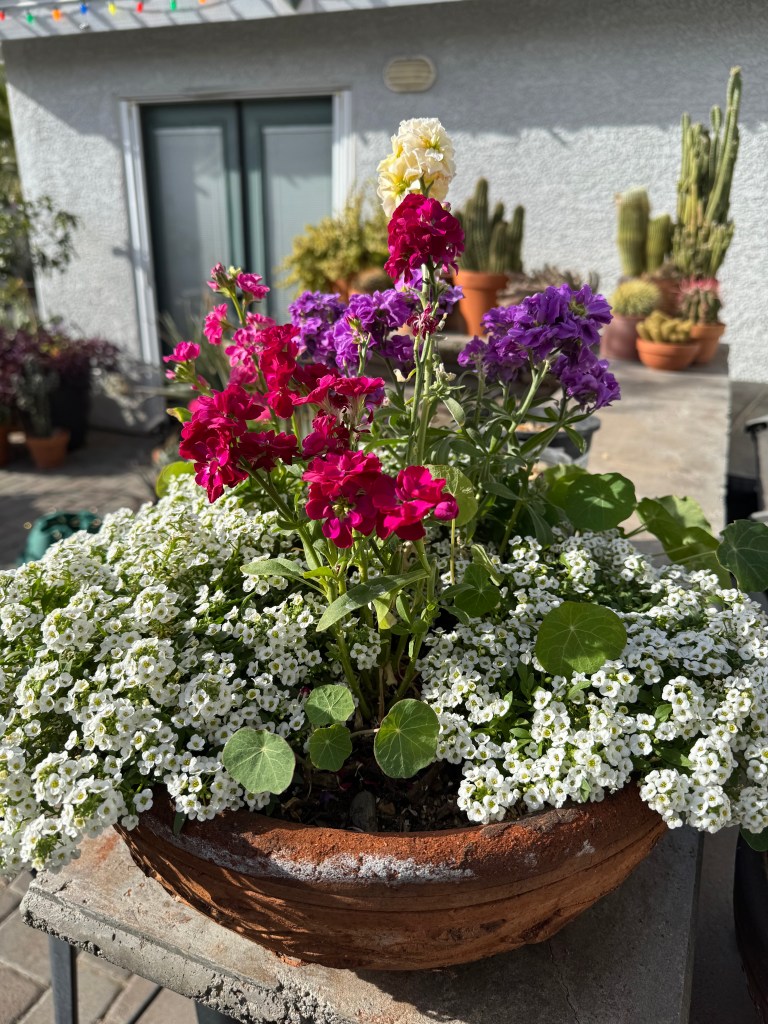
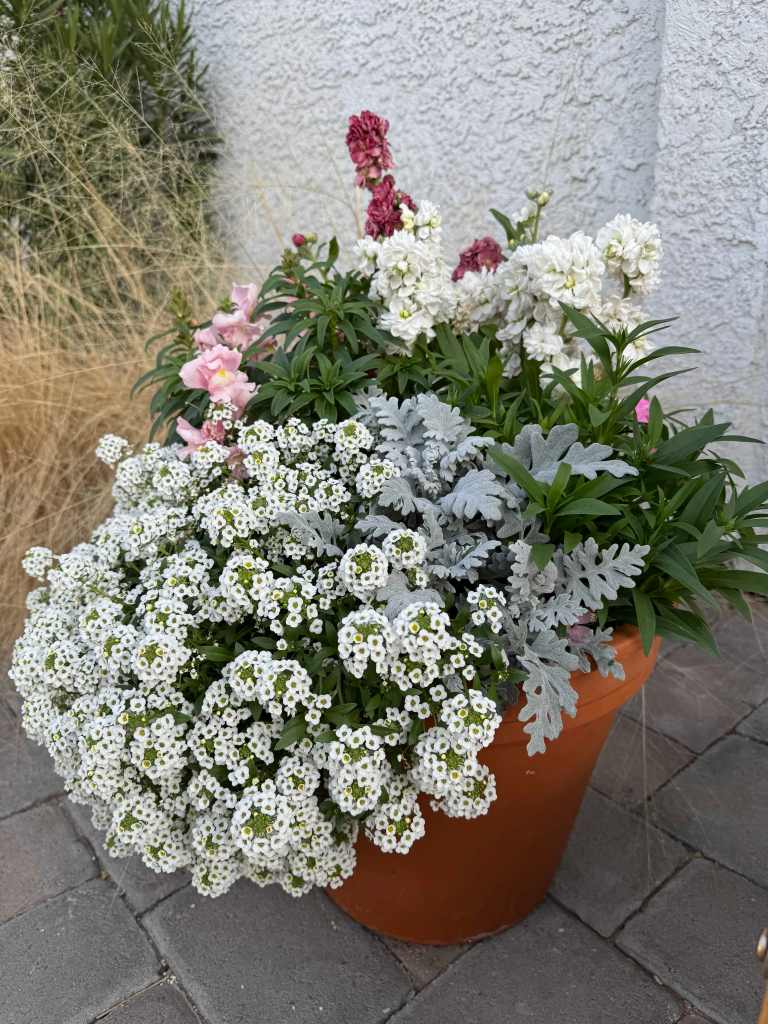
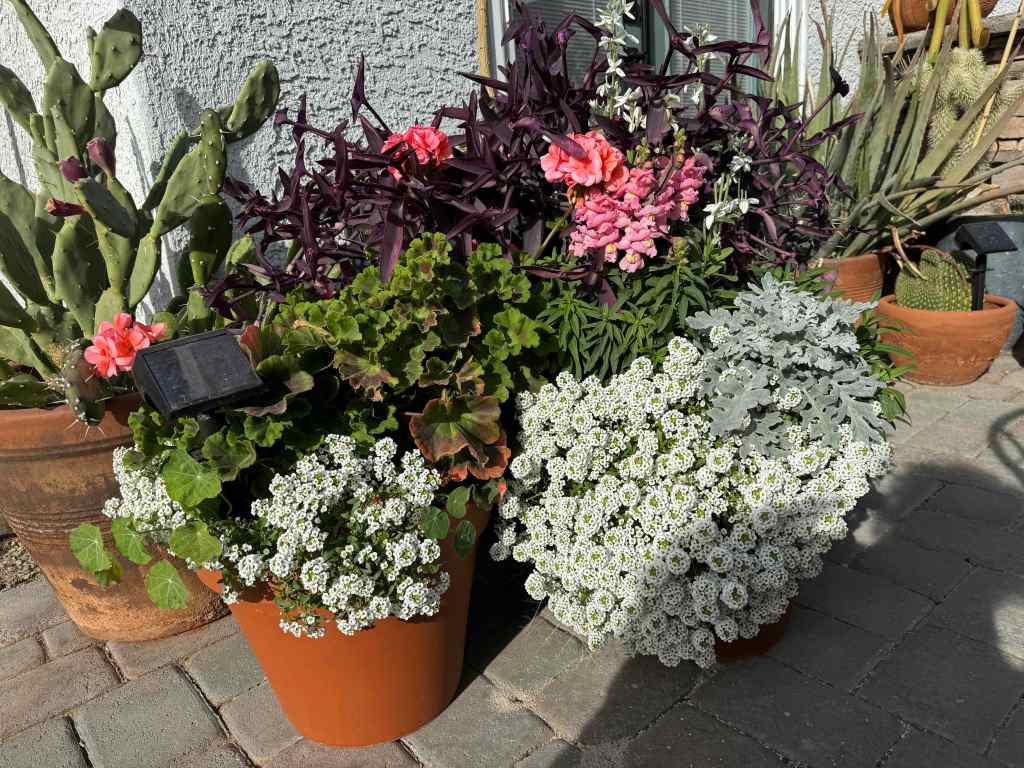
The annuals in containers are in paradise and the courtyard smells like clove and honey. They need water every five to seven days right now. Some winters I can get away with watering every 10 to 14 days, but not this year. I got nasturtium in late, but all their little lily pad-shaped leaves are growing bigger in the sun and warmth—they will need to be covered if a hard frost comes, though in the protected courtyard hard frosts are rare.

The new vegetable patch in the back part of the garden has struggled to fulfill my dreams of winter abundance. I miscalculated how much shade the house casts when the sun is so low on the horizon, so it gets sun for just a bit in the morning and afternoon. In late January it should get full sun again and, I hope, dizzying growth. The conditions have not stopped the fava beans from blooming.
This is my first time growing broad beans and I was shocked by the blossoms on the desert-adapted variety I chose. Pure white and black. I first thought they had been damaged by frost, but no, the flower markings really are that dark.

A pack rat found the bell peppers and tomatoes that have been growing in my dilapidated greenhouse. He helped himself to every pepper and a handful of tomatoes, but seemed mostly interested in stripping the leaves from the pepper plant and chewing the thick, watery stems. He only nibbled the roma tomatoes. Now that the cat is permanently indoors and the dog door is mostly down, nightlife has returned to the garden.
I like that idea of return: how a garden disrupts and is disrupted, but how it eventually discovers a rhythm. Even this drought takes on a kind of presence, registering hardly at all as absence, as it presses on the garden and the foothills, making the land after its own image.
We tend to think of drought as not-rain, but drought is itself a force acting upon the great terrain of desert being. I don’t think we should fear it, though it will certainly change even this seemingly unchanging habitat. The oldest records all talk of drought, some much worse than this. Water makes the rules here, and I wonder what those rules will look like in the years to come.
For now, I water and cultivate the garden.


 Mojave Gardener